


 June 10, 2026
  8 min read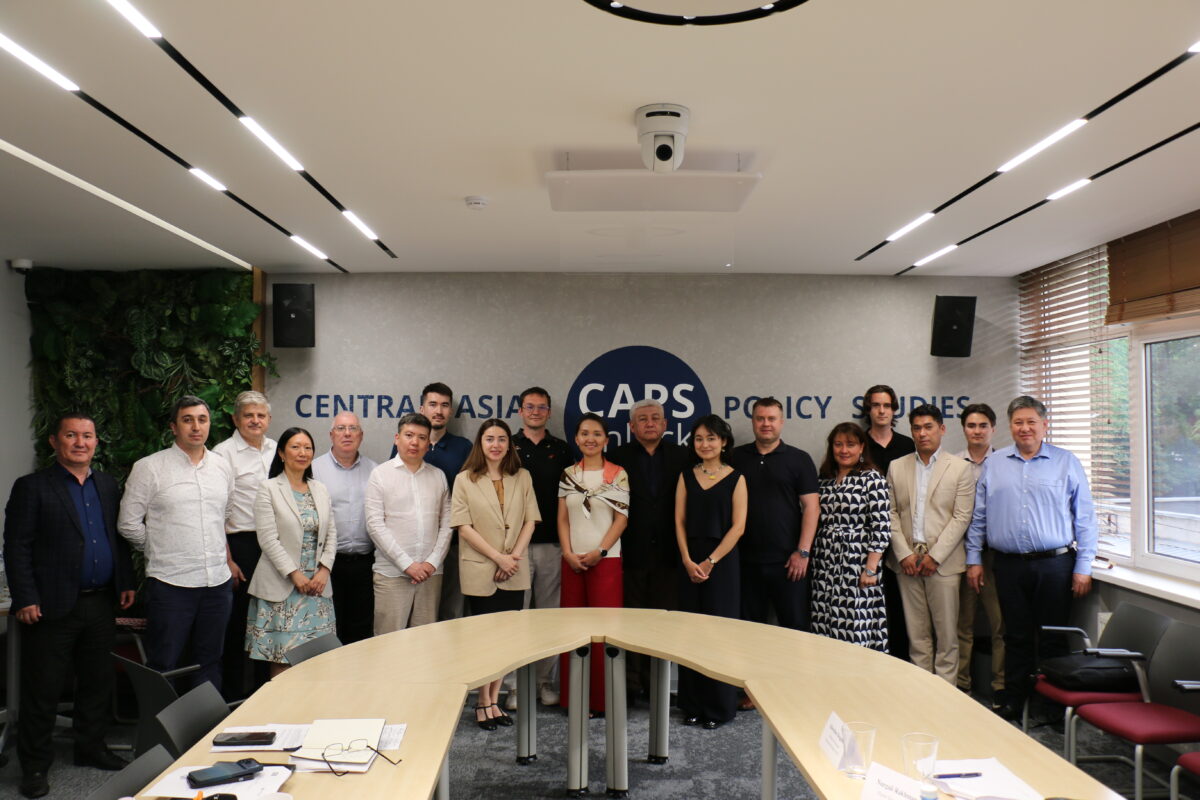
It is one thing to generate electricity. Getting it where it needs to go is another matter entirely.
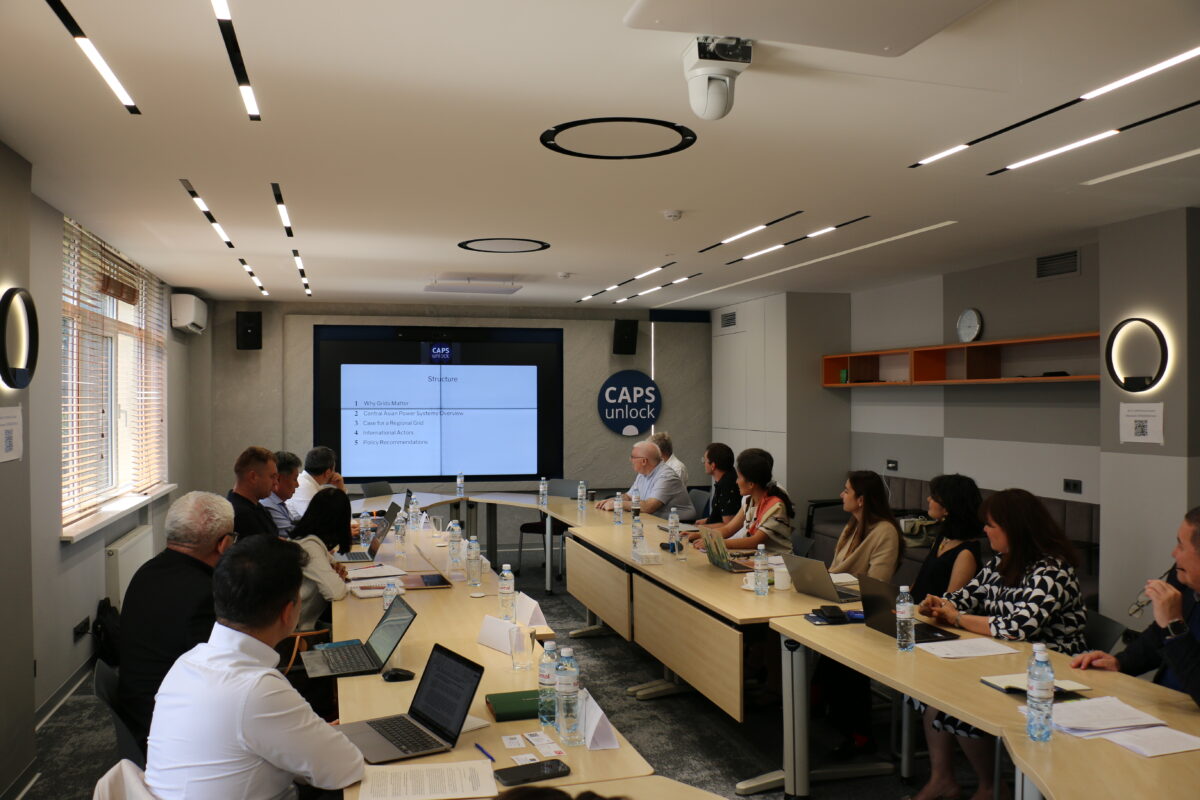
That deceptively simple conundrum sat at the center of discussions held this week at CAPS Unlock offices in Almaty, where experts from across Central Asia gathered to discuss regional electricity integration, grid resilience, and the future of the region’s energy transition.
Presenting her recently published paper on Central Asia’s electricity systems prepared for the Friedrich Ebert Foundation, power industry expert Aruzhan Meirkhanova argued that discussions about energy transition often focus on new generation capacity: solar parks, wind farms, hydropower projects, and, these days, even nuclear plants.
Far less attention is paid, however, to the networks that move electricity across countries and to consumers.
“If countries build generation faster than they build transmission or distribution, then the energy transition risks being stalled,” she warned.
Meirkhanova drew on International Energy Agency modelling to explain what happens when grids lag behind generation: renewable projects are built, but the transmission infrastructure needed to move electricity from often remote generation sites to consumers fails to keep pace. The result is continued reliance on fossil-fuel backup generation and ultimately far higher emissions than if the infrastructure had kept up.
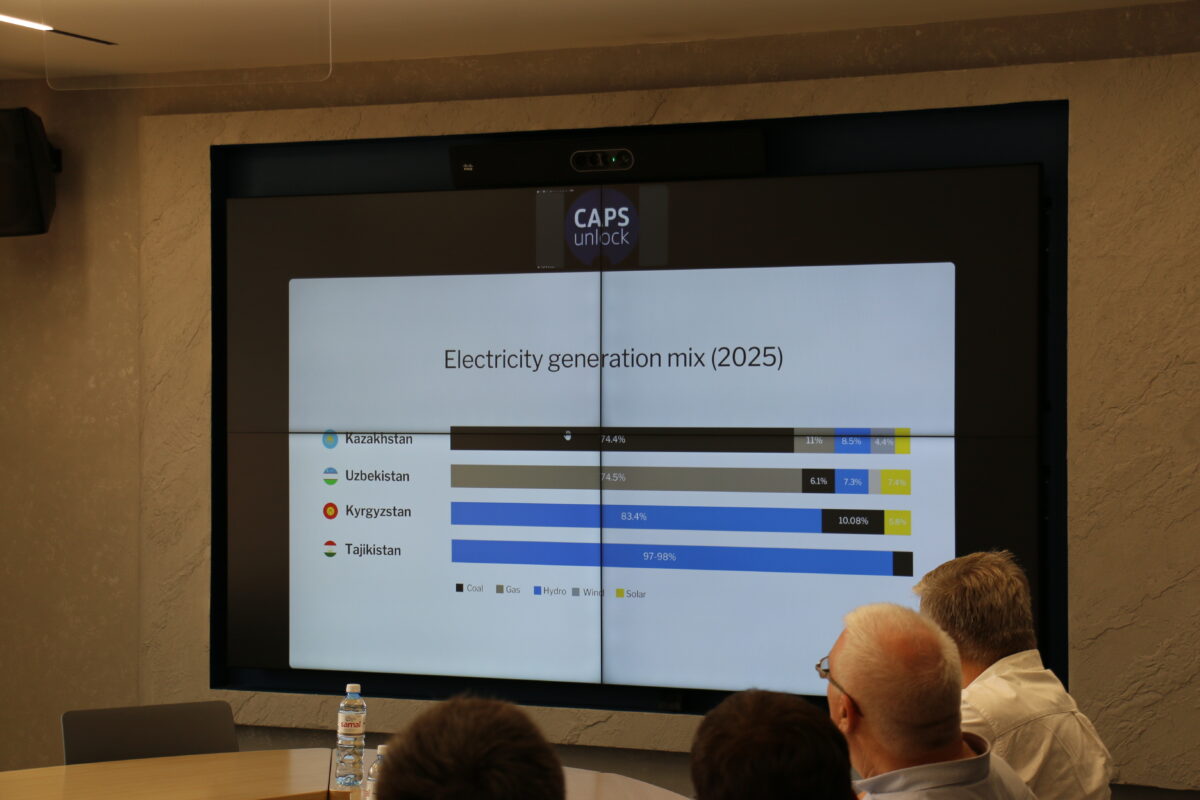
This entire theme resonates strongly in a region still haunted by the January 2022 blackout that simultaneously affected Kazakhstan, Kyrgyzstan, and Uzbekistan. That incident served as a reminder that Central Asia’s electricity systems remain deeply interconnected, even if political and regulatory integration has often faltered.
Meirkhanova described the challenge facing policymakers as an “electricity dilemma”: balancing the drive to reduce carbon intensity against the need to maintain reliability as demand grows. The problem is particularly acute in Central Asia, where electricity consumption is expected to rise rapidly due to population growth, industrial development, digitalization, and the emergence of energy-intensive sectors such as data centers.
At the same time, governments are pursuing ambitious renewable energy targets. Uzbekistan aims to generate half of its electricity from renewable sources by 2030, while Kazakhstan continues to expand solar and wind generation across the country.
Meirkhanova’s presentation repeatedly returned to a basic point: generation is only one part of the equation.
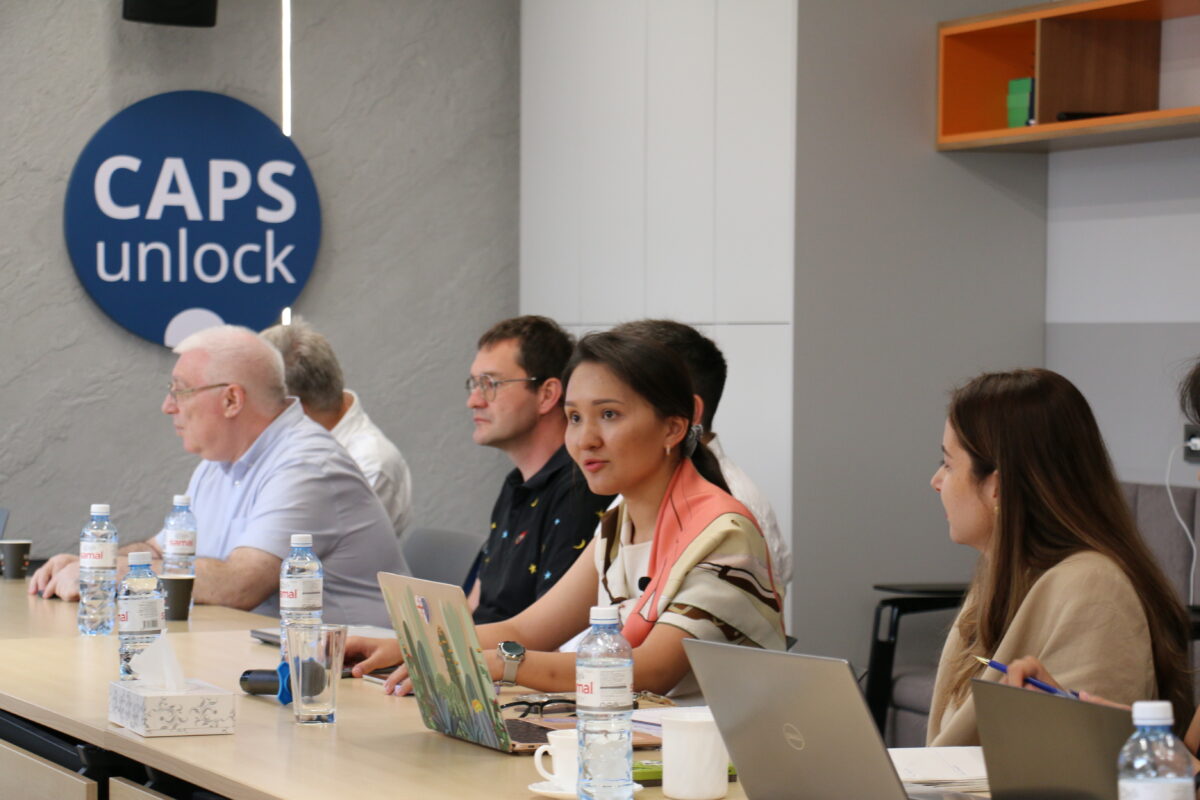
A significant portion of the discussion that followed focused on the condition of existing electricity networks. Across the region, many distribution systems date back several decades and suffer from high technical losses well above global averages, reflecting years of underinvestment and deferred maintenance.
Several participants in the CAPS Unlock roundtable argued that the challenge extends beyond infrastructure itself.
Nurgali Rakhmanov, director of Digital Society, a think tank based in Almaty, framed resilience as fundamentally a governance problem rather than an engineering one.
Power distribution companies, he argued, often prioritize the cheapest available equipment over solutions with the lowest lifetime costs. Procurement standards are weak, corruption risks are embedded in the system, and electricity theft, including from illegal crypto mining operations, continues to undermine efficiency.
“Resilience is best examined through the lens of governance,” Rakhmanov said. “In energy infrastructure, the weakest part is distribution companies. Losses are growing not only because of the aging Soviet-era networks, but also because distribution companies buy equipment at the lowest entry price rather than on lifecycle costs.”
He added a pointed observation about the political economy of the problem.
“There is a game. The main lobby to increase the tariff is distribution companies,” he said, describing them as institutions that stand to benefit from higher revenues while resisting the governance reforms that would reduce their losses in the first place.
The discussion also highlighted inherent tensions between the region’s green ambitions and its continuing need for reliable baseload power. While renewable energy featured prominently throughout the event, participants repeatedly returned to the reality that coal, gas and nuclear power remain a core part of Central Asia’s energy future.
Kanat Tilekeyev, a senior research fellow at the University of Central Asia, pointed to plans unveiled in late 2025 for a major coal-fired power station in Kyrgyzstan, which has raised concerns in some quarters about environmental impacts and compatibility with the country’s climate commitments.
Other speakers discussed the growing role of small modular reactors, particularly in Uzbekistan, and whether next-generation nuclear projects might provide the kind of flexible baseload capacity needed to balance increasingly renewable-heavy grids.
The relationship between energy and water emerged as another major theme. Participants from Kyrgyzstan and Tajikistan stressed that regional electricity integration cannot be separated from water management. Hydropower remains critical for both countries, but changing precipitation patterns, glacier retreat, and competing demands for irrigation water are increasing pressure on existing arrangements.
“We have to really think about how the redistribution of surplus within Central Asia works,” said Zuhra Halimova, senior advisor at CAPS Unlock.
Halimova noted that projects such as CASA-1000 are designed to export surplus electricity to South Asia, raising questions about how regional demand and export opportunities should be balanced.
“Particularly when Tajikistan is producing surplus, they are very much interested in selling outside of the Central Asian region,” she said.
That intervention broadened the discussion beyond grids and power stations into questions of regional governance and political coordination. Several speakers noted that the key obstacles to deeper electricity integration are not necessarily technical. The region already possesses substantial interconnections inherited from the Soviet period. More difficult are questions of trust, regulation, settlement mechanisms, and information sharing.
While political trust across Central Asia has improved markedly in recent years, Meirkhanova argued that regulators are not yet ready for the kind of deep integration seen in the European Union.
Instead, she pointed to the World Bank’s proposed REMIT platform, which would allow cross-border electricity trading without requiring countries to share highly sensitive operational data or fully align their domestic regulations.
There is, she suggested, “definitely a level of trust to have this World Bank proposed trading platform,” although a genuinely integrated regional market will require a great deal more.
The role of external actors also received considerable attention. While Russia, China and the European Union featured prominently in Meirkhanova’s presentation, later discussion highlighted the increasingly significant role of Gulf states.
Roman Vakulchuk, head of the Climate and Energy Group at the Norwegian Institute of International Affairs, noted that Saudi Arabia and the United Arab Emirates have invested a combined $7 billion into renewable energy projects across Central Asia since 2022. Gulf capital is increasingly paired with Chinese technology and project implementation.
The arrangement amounts to a division of labor: Gulf states supply finance and burnish their profile as global clean energy players, and Chinese firms provide the equipment, engineering and execution. Crucially, Vakulchuk observed, the major international players do not currently regard Gulf involvement in Central Asia’s energy sector as a threat.
“The United States, Russia, the EU, China, they do not really see the Gulf countries as a big geopolitical competitor in Central Asia,” he said. “There’s not much geopolitical fuss around.”
That observation led back to the event’s central concern.
Vakulchuk noted that the share of investment flowing into grids has been a fraction of what has gone into generation capacity. That gap, he suggested, reflects what Central Asian authorities have actually been asking for.
The imbalance may ultimately define the next phase of Central Asia’s energy transition. The region has attracted growing international interest and substantial investment. The harder work, unglamorous, less visible, and often politically fraught, lies in the distribution networks, regulatory frameworks, and cross-border institutions that determine whether any of that new generation actually reaches the people who need it.
As Meirkhanova put it: “Central Asia’s energy transition will not be won only by adding green megawatts. It will be won by modernizing distribution, transmission, digitalization, human capital, and the institutions that make the system reliable, affordable, and resilient.”
The recently launched Turn It Around! Central Asia climate cards present an urgent message from a generation living on the front lines of environmental change. they are a powerful, collective call for change
Suddenly, climate change is not a distant headline but something that touches the edges of their own experience.
Why this expensive, inefficient and fragmented corridor works for the EU and for Central Asia
