


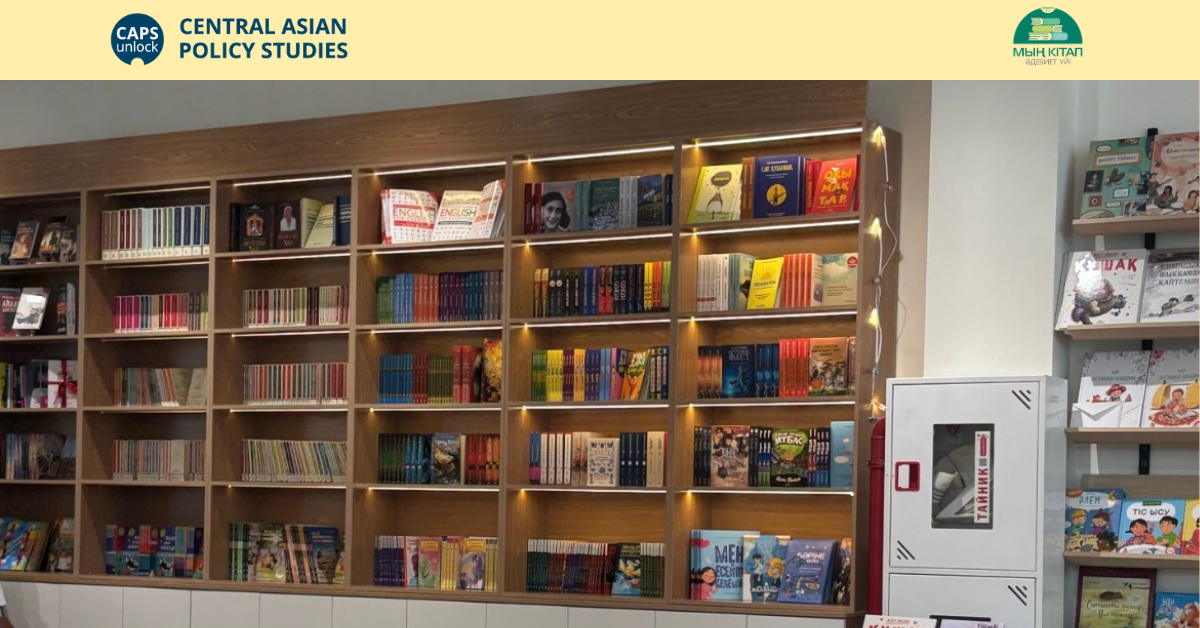
Join the third meeting of Between the Lines, a new English-language book club from CAPS Unlock and 1000 Books.
The reading session will center on the powerful essay The Greater Common Good by Arundhati Roy – a writer known worldwide for her fearless voice, moral clarity, and commitment to justice.
Date: 15.05.2026
Venue: 1000Kitap, 101/1 Kazhymukan str., Almaty.
PDF available at Frontline Vol. 16.
Arundhati Roy is an Indian author and political essayist known for her powerful writing on social justice, environmental issues, and human rights. She rose to international fame after winning the Booker Prize in 1997 and has since become one of the most influential public intellectuals of her generation.
Why This Essay? Why Now?
The Greater Common Good (1999) is a major essay by Arundhati Roy that critiques large-scale development projects and questions who benefits from them. First published in a magazine and later collected in The Cost of Living, it remains one of her most influential works on environment, displacement, and justice.
In a world shaped by rapid environmental change, growing inequality, and complex political realities, the question of the ‘common good’ feels more urgent than ever.
In The Greater Common Good, Roy examines the human cost of large-scale development projects, asking difficult questions about who benefits, who pays the price, and how decisions are made. Her writing blends storytelling, activism, and deep ethical reflection – making it especially relevant for readers engaged in:
For young people in Kazakhstan and beyond, these themes connect directly to ongoing conversations about development, sustainability, and civic responsibility.
What to Expect
This is not a lecture – it’s a participatory, welcoming conversation space.
We will gather as a group of around 20 participants in a cozy bookshop setting, with coffee and light snacks, to explore the text together.
Session Flow
1. Welcome & Introduction (10–15 minutes)
2. Shared Reading (20–30 minutes)
3. Open Discussion (30–40 minutes)
We will explore questions such as:
4. Reflection & Dialogue (20–30 minutes)
Participants will be invited to share:
Suggested Preparation (Optional)
To get the most out of the discussion, you may wish to:
But don’t worry – you’re equally welcome to discover the text for the first time during the session.
A Final Thought
At its heart, this gathering is about one simple idea:
How can we think more deeply about the world we live in – and our role within it?
Through Roy’s writing, we encounter not easy answers, but powerful questions. And sometimes, asking the right questions is the beginning of meaningful change.
