


 October 22, 2026
 7 min read
Multibillion-dollar deals tell us little about who sets the terms of Central Asia’s relationship with China. Official accounts of high-level visits foreground the sums promised. They leave less space for the question of agency: what governments and communities want from those deals, and whether they can make Chinese partners deliver it.
For Evan Feigenbaum, Carnegie Endowment for International Peace’s vice president for studies, countries must first decide what they want to achieve.
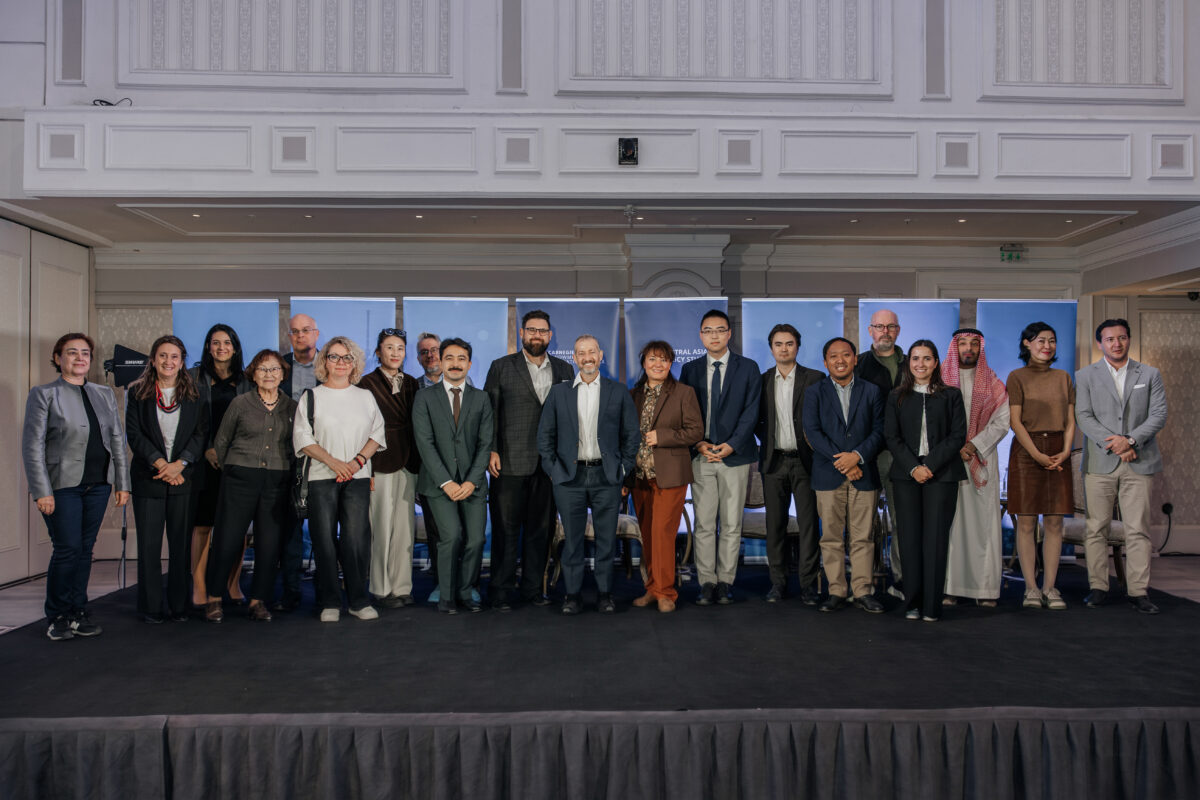
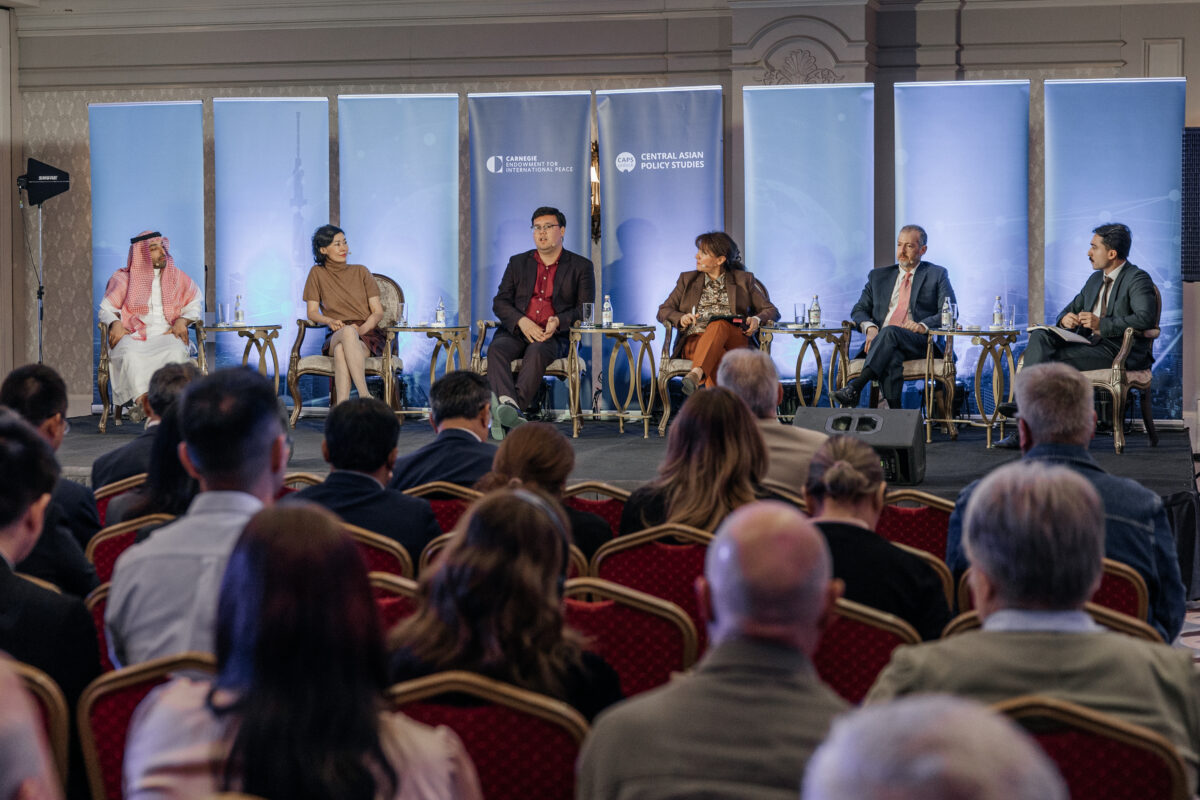
“Countries have to begin with a relentlessly national interest-based approach that begins with their objectives, their goals, and then tries to translate that into strategy,” he said at “How Local Agency Reshapes China’s Influence in Central Asia and Beyond,” an event organised by CAPS Unlock and the Carnegie Endowment for International Peace in Almaty on October 20.

The proposition under examination was that Chinese investors and institutions can bend to local demands, which gives their partners scope to shape relationships around their own needs. Carnegie’s China Local/Global project examines that process across seven world regions. The Almaty discussion asked how far those experiences apply to Central Asia, and, more precisely, whose interests prevail when governments, businesses and communities want different things.
Feigenbaum’s example of Kazakhstan’s transit ambitions made the economic choice concrete. A railway can carry Chinese goods across the country without creating much business beyond transport. Securing factories, local suppliers and skilled jobs along the route requires a strategy to persuade investors to leave more value behind. China’s increasingly diverse commercial interests offer opportunities to negotiate those terms.
Saudi Arabia provided a comparison of how such demands can work. Mohammed Alsudairi, a lecturer at the Australian National University, described how Riyadh uses coordinated state institutions and its Public Investment Fund to require joint ventures, staff development and technology transfer from Chinese partners.

He cited a Saudi factory project involving Lenovo, the Chinese computer maker. Because domestic suppliers could not yet provide enough components, the project included commitments to train local personnel and develop Saudi inputs over time. The ambition extended beyond a factory’s physical presence to the capabilities it could help establish.
But moderator Aida Aidarkulova, CAPS Unlock’s executive director, pressed the obvious limit to that comparison. After all, not every country commands Saudi Arabia’s resources.
Alsudairi acknowledged that its capital reduces its dependence on foreign investment.
“I think having strong national priorities, resources, which mean that you’re not really that dependent on FDI, even though this is a priority generally of the Saudi state to attract greater investment within the country,” he said.
Saudi Arabia’s financial resources give it advantages that Central Asian countries cannot easily replicate. But money is only part of the explanation. Governments also need clear, consistent rules if they want to steer investment toward national goals.
Research on Kyrgyzstan’s mining sector shows how contradictory rules can frustrate that ambition. Political scientist Asel Doolotkeldieva described companies whose license obligations conflict with environmental requirements or demands from local authorities. When companies cannot establish which rules take precedence, some projects stall.
“Other companies would resort to informal mechanisms of resolution, including, unfortunately, bribing and corruption,” Doolotkeldieva said.
Communities, unions and journalists can press companies over environmental damage and employment conditions. But, as Doolotkeldieva warned, restrictions on civic activity increasingly exclude the public from development decisions. A government may gain greater control over investment while the people most directly affected lose opportunities to challenge its choices.

Public pressure has nevertheless helped shape the relationship. Nazarbayev University scholar Berikbol Dukeyev linked Kazakhstan’s experience after the 2016 land protests to agricultural cooperation through jointly owned enterprises. Such arrangements suggested that concern about foreign control could influence how investment proceeds.
China’s response to local conditions also reaches beyond business contracts into how ordinary citizens encounter the country. Dukeyev described engagement with Kazakh-language media, business and travel coverage, films and direct contact through visa-free travel. These channels broaden relations previously concentrated among officials and elites.
Their effects warrant closer research; namely, who produces and consumes this material, whether travel changes perceptions, and how far exchanges give Kazakh participants opportunities to shape the relationship themselves. More contact alone does not answer those questions.
The international context could both help and hinder national choices.
Feigenbaum warned that U.S. pressure and incompatible technological systems could force countries toward one partner. Alsudairi pushed back on that assertion, however. China’s technological advances provide alternatives that can help countries obtain concessions, he argued.
Meanwhile, Carnegie fellow Temur Umarov noted that Central Asian governments actively cultivate outside interest to expand their options.
Comparisons elsewhere showed both the possibilities and their costs. Feigenbaum cited Indonesia’s ban on unprocessed nickel exports, which pushed companies to process the mineral domestically. Here was a specific policy that changed Chinese investment behavior.
Successes can, however, come with unintended consequences. As Feigenbaum pointed out, industrial expansion in Indonesia also came with harmful consequences for communities and the environment.

And it is this kind of precedent that makes the comparative exercise so useful for societies and policymakers in Central Asia as they offers the region examples of tools that can work, alongside reasons to question what success entails in practice. A processing plant establishes that more production takes place locally. It does not, by itself, establish fair wages, stronger domestic expertise or, ultimately, acceptable environmental costs.
The discussion in Almaty identified several ways to influence Chinese partners. It offered fewer answers about how to measure those wider benefits, or ensure that citizens have a say in the trade-offs. Aidarkulova’s caution supplied the essential test:
“Adaptation does not automatically mean that the local societies benefit.”
Why this expensive, inefficient and fragmented corridor works for the EU and for Central Asia
The fifth Central Asian Think Tanks Forum took place in Astana on October 7-8, with gender and politics at the center of its agenda. Organized by Paperlab in partnership with CAPS Unlock, with support from the Canadian Embassy in Kazakhstan, the forum brought together researchers and civil society practitioners from across the region. Since its […]
Launched in 2014, the six-day event is the only multi-sport competition devoted to the traditional sports of nomadic peoples.
