


 CAPS Unlock
 November 16, 2026
 4 min read
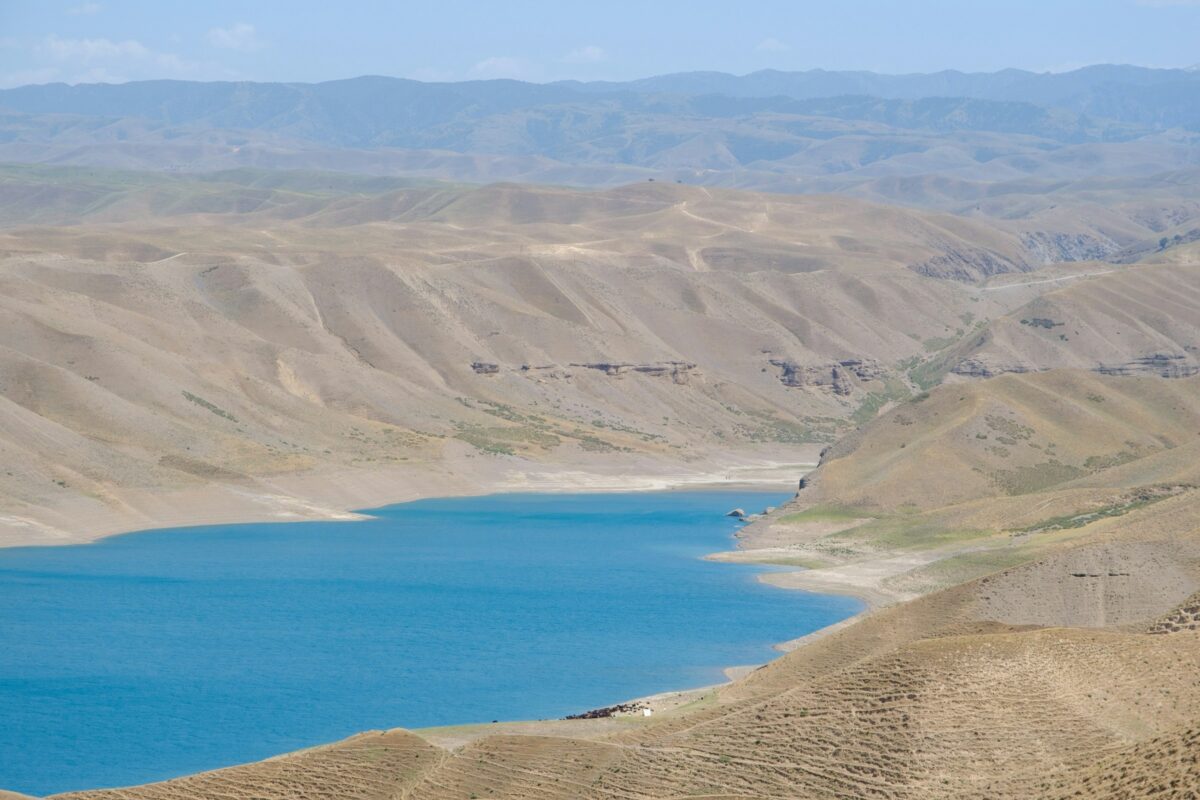
Imagine a sluice opening somewhere in Khorezm, in western Uzbekistan. The water runs into a canal built back in Soviet times. Its concrete lining is cracked in places and missing altogether in others. Where the lining has cracked, water seeps through the gaps.
Across Central Asia, between 30% and 50% of irrigation water is lost on its way to the fields.
Such losses would be hard to accept even in a land with water to spare. But Central Asia’s climate is changing: glaciers are melting, rivers are becoming less predictable and populations are growing fast.
Yet the leaking canal in Khorezm, like thousands of others across the region, is a reminder that the crisis is “not simply a consequence of climate change,” as economist Yuliy Yusupov argues in the latest edition of our regular insights series, The Argument. Much of the water lost in transit, he notes, has already been diverted, pumped and paid for.
Why does this persist? According to Yusupov, it is because the region runs on a system “that neither rewards conservation nor penalizes waste.”
In practice, many farmers’ bills are still calculated from the size of their fields rather than the water they use, so saving water earns them nothing. Meanwhile, the state bodies that operate canals and pumping stations face a perverse incentive: if they modernize and cut the cost of delivering water, their funding can shrink.
Much of this water is never properly measured, either. In fairness, Uzbekistan is trying to change that. Since 2025, farmers who install meters and drip or sprinkler irrigation pay half the standard water tax; those who do neither pay 10% more. A digital platform, Suv Hisobi, is being rolled out to calculate each user’s consumption. But meters still cover only part of the network. In July 2025, President Shavkat Mirziyoyev acknowledged that Uzbekistan still lacked precise records of what individual farms consume.
Even perfect metering, Yusupov argues, is “not enough on its own.” Farmers also need a reason to use less: “for a resource to be valued, it has to cost the user something.”
Prices alone will not fix the problem, because the institutions around them often work against conservation too.
Water user associations are expected, as Yusupov puts it, “to distribute water, collect fees and maintain smaller canals,” yet many lack control over the infrastructure, the equipment to repair it and the authority to make important decisions. Charges paid by farmers barely cover the system’s operating costs. Meanwhile, farmland remains state-owned, often on uncertain leases, making it harder for farmers to borrow for equipment such as drip irrigation.
Beyond national borders, the bodies that divide the Amu Darya have little power to enforce agreed limits. And Afghanistan, now building the vast Qosh Tepa Canal to draw on the same river, sits outside the system altogether.
This is not a counsel of despair.
Unlike a shrinking glacier, a leaking canal can be repaired, and much of what is needed already exists on paper. Yusupov’s principle is simple: those who deliver and use water should benefit financially from saving it.
For canal operators, that means being rewarded for reliable deliveries and lower losses, and keeping a share of the savings. Uzbekistan has begun moving in this direction, tying staff bonuses to how much water actually reaches farms. For farmers, it means paying for the water they actually receive and, where savings can be reliably measured, profiting from using less. Uzbekistan’s 2025 Water Code already allows conserved water to be transferred on a commercial basis; the mechanisms to make that work have yet to follow.
Guaranteed lease renewals and affordable credit would help farmers invest more confidently in water-saving equipment. Water-user associations need clear legal status, funding and the tools to maintain local canals. Across the basin, governments need shared data and rules that work in practice.
Renewing worn canals will still cost money. But scarcity is only part of Central Asia’s water problem. The rest lies in a system that makes waste cheap and conservation unrewarding. That can be changed. And then those who open the sluice in Khorezm will finally have a reason to make sure the water reaches the field.
Central Asia is investing heavily in solar parks, wind farms, hydropower and even nuclear energy. But how do you actually get all that electricity to the people who need it?
Migration is already reshaping Turkmenistan. The question is whether policy will continue to push people into insecurity, or begin to recognize the reality on which so many families already depend.
The recently launched Turn It Around! Central Asia climate cards present an urgent message from a generation living on the front lines of environmental change. they are a powerful, collective call for change
